When Sony announced it was ending physical disc production for new PlayStation games in 2028, the assumption was that somebody with real commercial skin in the game would push back. Petitions crossed 200,000 signatures, retailers voiced concern, and the community mobilised. So when Bloomberg Tech put the question directly to the CEO of the largest brick-and-mortar game retailer on earth, there was at least a chance of an ally. Instead, Ryan Cohen delivered the bluntest possible dismissal. "It doesn't matter, it doesn't matter at all," he said. "Software, it mattered in the past. Software today makes up less than 12% of the Business and collectibles makes up over half the Business. So it's totally and totally irrelevant."
That's the whole defence from the company with GAME in its name. And the reason this lands harder than any of Sony's corporate messaging is straightforward: platform holders killing discs is self-interested, since they profit from digital storefronts and lose nothing by closing the second-hand market. GameStop is different. GameStop is the Business built on selling and reselling physical copies, the one Entity whose commercial survival was supposed to depend on discs existing. If even they've concluded the format is a rounding error, the argument about whether physical media has a future has already been settled, and the people signing petitions are fighting for something the industry quietly buried a while ago.
The Number Doesn't Quite Hold Up
There's a wrinkle worth pulling on here, because Cohen's own figure sits awkwardly against what his company has already told the market. Earlier this year, GameStop reported that game sales accounted for 18% of revenue, with trading cards and toys at 41%. Cohen's "less than 12%" is a notably smaller number than that, which either reflects a very fast Collapse over a matter of months or a CEO rounding aggressively in the direction of the story he'd rather tell. Either way, calling 12% of a Business "totally irrelevant" is a strange thing for any chief executive to say out loud, since no company on earth casually waves off an eighth of its revenue, particularly a slice that's likely carrying decent margins. The internet Noticed immediately, with the general tenor being that if you lose 12% of your revenue, your investors will have opinions about it.
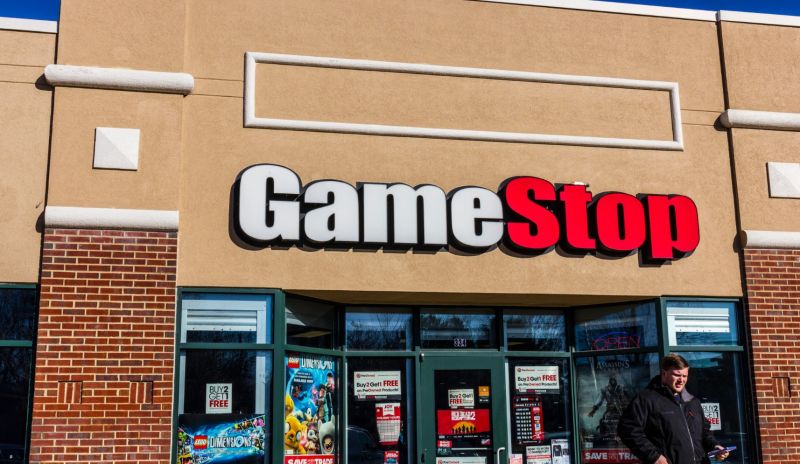
To be fair to Cohen, the underlying trajectory is real and anyone who's set foot in a GameStop recently knows it. The shelves are stacked with Funko Pops, plush toys, and Pokémon cards, and the company reportedly posted record first-quarter profits on the back of trading cards and action figures rather than anything you'd play. The pivot worked. It just also turned a game shop into a collectibles shop that hasn't gotten around to changing the sign.
The Moment That Tells You Everything
The single most revealing exchange in the interview wasn't the quote everyone's clipping. When Bloomberg asked Cohen about the sales potential of GTA 6, the most lucrative game launch in history, arriving in November, he replied: "I want to go back and talk about eBay."
Sit with that. The head of the biggest game retailer in the world was handed a question about the biggest game ever made and actively steered away from it to talk about an acquisition target whose board rejected his bid back in May. His pitch is that a combined GameStop and eBay could be a "$1 trillion Business," and he signed off insisting "we're coming for eBay one way or another," while declining to say whether he'd raise his offer. That's where the attention is. Not on games. Not on the launch that will define the year. On a rejected buyout of an auction site.
And there's a bleak symmetry in it, since GTA 6 is itself shipping without a real disc, the physical version being a download code in a box. The biggest release in gaming history offers GameStop essentially nothing to sell, and its CEO would rather discuss eBay. Those two facts belong together.
What This Actually Means for Discs
The uncomfortable conclusion for anyone still campaigning to save physical media is that the commercial coalition they needed doesn't exist. Sony has retooled its factories, Rockstar has reduced the disc to a cardboard formality, and now the retailer that would have been the format's most motivated advocate has publicly declared the whole issue irrelevant to its future. There's no one left with the money and the incentive to fight for it.
You can respect the honesty, in a way. Cohen isn't pretending, isn't offering hollow reassurances about GameStop's commitment to gamers, isn't dressing the retreat up in language about evolving with the community. He's just saying the quiet part with both hands. Games aren't the Business anymore, collectibles are, and the death of the disc is somebody else's problem. It's a sad thing to hear from a company whose name is a monument to what it used to sell, and the jokes about that name being a prophecy write themselves. But sad and accurate aren't mutually exclusive. The last store standing has looked at the future of physical games and decided it isn't worth the breath.
More:How to Earn MW4 Beta Sweepstakes Tickets at CoD Champs 2026
 Read
Read
 Source Editing
 Visual Editing


 Related news