 Read
Read
 Source Editing
 Visual Editing

Google, founded in September 1998 by Larry Page and Sergey Brin, began as a search engine designed to organize the world’s information and make it universally accessible and useful. The company originally started as a research project at Stanford University, where Page and Brin, both Ph.D. students, developed an algorithm called PageRank to rank web pages based on how many other pages linked to them. Here's a brief timeline of its history:
1998: Google was officially founded by Page and Brin, who received a $100,000 investment from Andy Bechtolsheim, a co-founder of Sun Microsystems. The name "Google" is a play on the word "googol," which refers to the number 1 followed by 100 zeros, representing the vast amount of data the search engine could handle.
2000: Google AdWords was introduced, allowing advertisers to place ads on search results pages. This became the cornerstone of Google’s revenue model.
2001: Eric Schmidt became the CEO of Google, providing leadership as the company scaled up.
2004: Google went public with its initial public offering (IPO), raising $1.67 billion and marking its entry into the stock market. By this time, Google had already become the dominant search engine.
2005-2007: Google expanded into a range of new products and services, including Google Maps, Gmail, Google Earth, and the Android operating system. Android would later become the most widely used mobile operating system globally.
2006: Google acquired YouTube for $1.65 billion, cementing its position in video content.
2008: Google launched the Google Chrome web browser, which rapidly gained market share due to its speed and simplicity.
2015: Google restructured and became a subsidiary of Alphabet Inc., a holding company that oversees Google’s various ventures, including autonomous driving (Waymo), smart home technology (Nest), and health technology (Verily).
2020s: Google continued to grow its dominance in search, advertising, cloud computing, and artificial intelligence. The company faces increasing scrutiny and regulatory challenges worldwide over issues like privacy and anti-competitive behavior.
Today, Google is part of Alphabet, with a global reach and a hand in everything from advertising and cloud services to AI and autonomous driving. Its search engine remains the most widely used tool of its kind.
News
- 2025-11-06 Google and Epic Signs Deal for Third-party Stores
- 2025-10-31 Google to Allow Additional Payments
- 2024-11-25 Competition and Markets Authority Asks for an Investigation on Google and Apple
- 2024-05-03 Google Rejects Epic's Demands
- 2024-04-15 Epic Games vs. Google Play
 Related news


SideQuest, a well-known gaming café chain in the UK, has announced that it will permanently close three of its locations...
TikTok’s parent company, ByteDance, is reportedly discussing the sale of Shanghai Moonton Technology Co., the studio behind Mobile Legends: Bang...
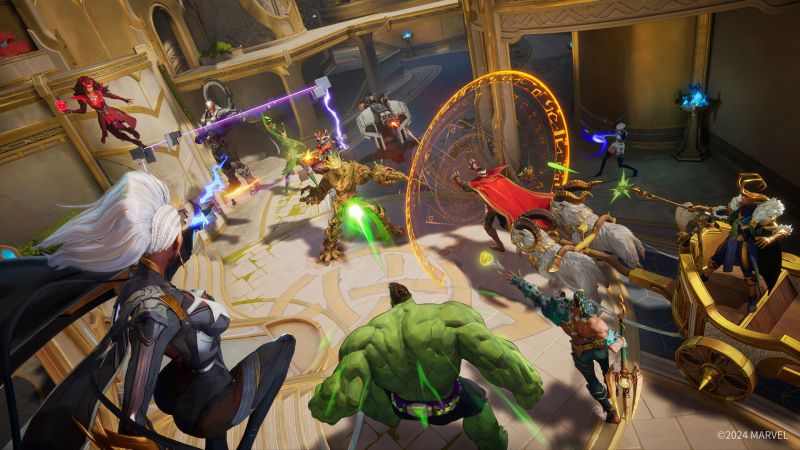
Discord is rolling out a new shopping and gifting experience in partnership with Marvel Rivals. This feature will allow players...
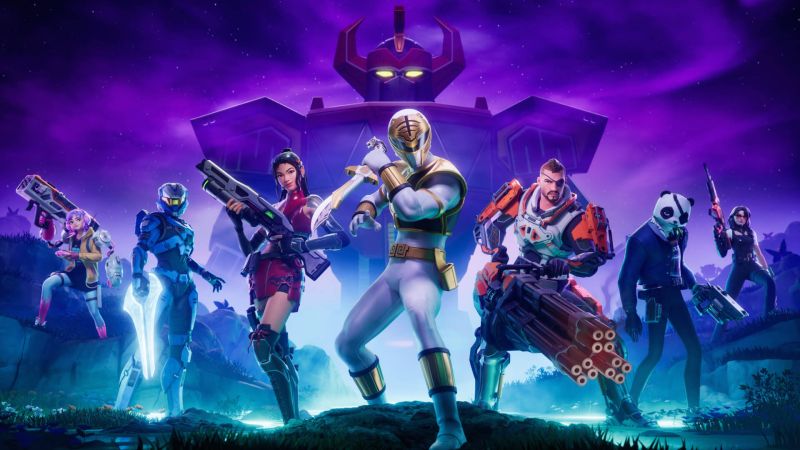
A sealed, early-edition physical copy of Fortnite has stunned collectors after selling for $42,500 at a recent Heritage Auctions event....