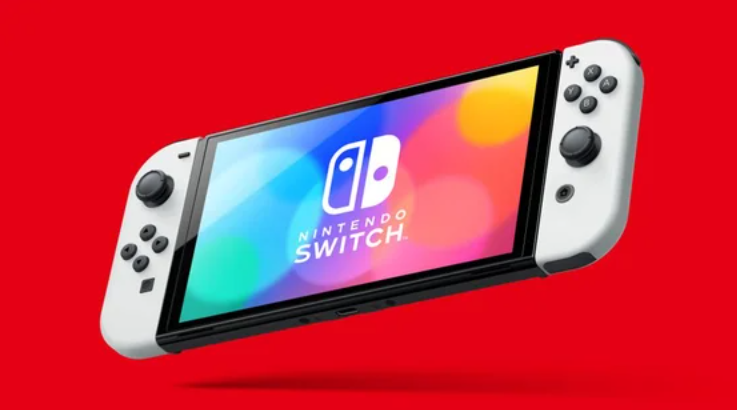
This was expected, a company will never relinquish free money.
Nintendo asking a court to throw out a class-action lawsuit over tariff refunds comes down to one clean, old-fashioned legal principle, that a completed sale at an agreed price is final, full stop. The company filed its motion to dismiss on July 21, responding to a proposed class action brought in April by two US customers who argue Nintendo would be unjustly enriched if it pockets a government tariff refund after having raised prices to cover those same tariffs. Nintendo's central line is blunt: buyers "received exactly what they bargained and paid for," and "are not entitled to a rebate simply because of intervening legal developments related to tariffs." Whatever you think of the optics, it's a legally clean argument, and it's likely the strongest position Nintendo could take. None of this is legal advice, but the underlying contract principle is well established.
Beginning in early 2025, the Trump administration imposed tariffs on goods from countries including China and Vietnam, where Nintendo manufactures. Nintendo, like hundreds of other importers, treated those tariffs as a cost and raised prices, hiking Switch 2 accessories and other hardware. Then, in February 2026, the US Supreme Court ruled those IEEPA tariffs unlawful in a 6-3 decision, opening the door for importers to reclaim the roughly $166 billion in duties collected. Nintendo promptly filed its own suit in March seeking a refund with interest, and the government opened a refund Portal in April. The very next day, plaintiffs Gregory Hoffert and Prashant Sharan filed their class action, arguing that if Nintendo recovers those tariffs from Washington after already recouping them from customers through higher prices, it's effectively being paid twice for the same cost, what they call "double-dipping."
Why "That's Not How Transactions Work" Is Hard to Beat
Nintendo's lawyers leaned directly into the finality of commercial transactions, and it's the crux of everything. "The common thread among Plaintiffs' claims is that it is somehow 'unfair' that Nintendo has not retroactively adjusted its prices for completed sales in response to the outcome of the tariff litigation," the filing reads. "But that is not how commercial transactions work." Their reasoning is that Nintendo, or a retailer, set a price, and each customer independently decided whether that price was worth paying. As the lawyers put it, "if a consumer did not want to pay the advertised price, they were free to abstain from purchasing the product or seek out competing products." Anyone who bought got a console, game, or accessory at a price both sides agreed to, and "the money Plaintiffs paid represents the purchase price of the goods they wanted and received."
Nintendo's Ace: It Says It Ate the Tariff on Switch 2
Bolstering the legal argument is a factual one that undercuts the "double-dip" framing at its root. Nintendo's filing stresses that it never simply passed the full tariff cost onto buyers. "Nintendo did not simply increase each product's price by the amount of tariffs it paid on that product or impose an across-the-board tariff surcharge," the lawyers wrote. "Instead, Nintendo imposed modest and selective price adjustments, and it chose to bear the costs of tariffs on some of its most popular products of 2025, including its flagship console, the Nintendo Switch 2." That detail matters enormously, because it's hard to accuse a company of unfairly profiting from tariffs it demonstrably chose to absorb on its biggest product. Nintendo notably held the Switch 2 at its original $449.99 price despite the tariff pressure, even briefly delaying US pre-orders while it worked out the impact.
Where the Plaintiffs Might Still Have a Point
The plaintiffs' unjust-enrichment theory is based around that a company shouldn't get to keep money twice over for the same cost, once from customers and once from the government with interest. Their strongest ammunition may be Nintendo's own words, since CEO Shuntaro Furukawa told investors in May 2025 that the company's "basic policy" was that tariffs would be recognised "as a part of the cost" and "incorporated into the price." That statement, now sitting at the centre of the suit, complicates Nintendo's insistence that its price hikes weren't straightforwardly tariff pass-throughs, at least for products other than the Switch 2. Whether that's enough to survive a motion to dismiss is another matter, and legally the plaintiffs face an uphill climb against the finality-of-contract principle.
Ultimately, this is shaping up as a test case for a question the tariff saga created across the whole economy, namely whether consumers who paid tariff-inflated prices have any claim on the refunds now flowing back to importers. Nintendo is betting, with reasonably firm legal ground under it, that the answer is no. The case remains in its earliest stages and could take months or years to resolve, but Nintendo's opening move is about as strong as motions to dismiss get, resting not on whether the situation feels fair, but on the far harder-to-dislodge principle that once you agree a price and pay it, the deal is done.
More:FaZe Vegas Win CoD Champs 2026, Deny OpTic a Three-Peat
 Read
Read
 Source Editing
 Visual Editing


 Related news