Interesting turn of events, less sponsors but more money.
Riot Games finally getting its esports business "super close" to profitability, after years of it bleeding money, traces back to a single strategic move made in the wreckage of the pandemic: abandoning its reliance on sponsorships and rebuilding the whole economy around digital items. For most of its history, Riot's competitive scene was a chronic loss-maker, tolerated because it functioned as a giant marketing showcase rather than a business. What changed, according to head of publishing and esports John Needham, was that the "esports winter" of the early 2020s exposed how fragile a sponsor-dependent model actually was, and forced a rethink. As Needham puts it, "the sponsorship business was weak, teams were having a hard time getting capital and investment," so Riot "pivoted our business model away from sponsorships to digital items."
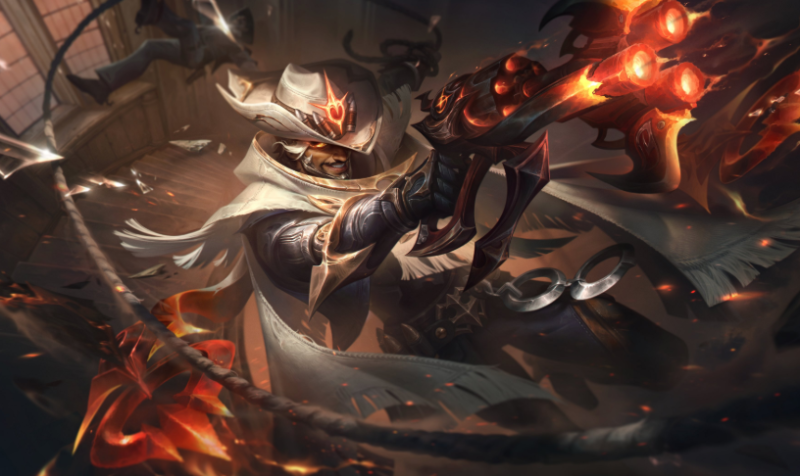
Instead of leaning on brand deals that dry up the moment the economy wobbles, Riot tied team revenue directly to in-game cosmetics, sharing a cut of sales from esports-themed skins, team capsules, and bundles. The scale is genuinely large, with Needham revealing that Riot shared over $100 million in digital revenues with Valorant Champions Tour teams last year alone, roughly $86 million of which came specifically from esports cosmetics. For League of Legends, the same logic runs through a Global Revenue Pool that distributes digital income to top teams, split across general shares, performance-based competitive shares, and fan-engagement shares. The beauty of this model, from a team's perspective, is stability, since a predictable cut of skin sales is far more reliable than a sponsorship market that can collapse overnight. Teams also did their part by reining in the reckless spending of the boom years, and the combination has left the team business, in Needham's words, "in as good a place as it has ever been."
Loosening the Leash to Keep Teams Afloat
Organisations like France's Karmine Corp and South Korea's T1 are now running their own esports events, and Riot says it's being "more liberal" about letting teams participate in third-party tournaments, a real departure for a company that historically wanted control over nearly everything competitive. The clearest example of this pragmatism is Riot finally allowing gambling sponsors, reversing more than a decade of keeping betting brands out. Needham frames it as harm-reduction rather than a cash grab, arguing "gambling is going to happen around esports regardless of if we are involved or not," and that Riot's official-betting-partner programme forces those platforms to subscribe to clean data and actually helps Riot monitor for match-fixing. Whether you buy that reasoning or see it as a convenient rationalisation, the direction is the same, which is Riot loosening its rules to give teams more paths to revenue because their financial health is now central to the whole model working.
The Nuance Nobody Should Skip
Under Riot's newly merged publishing-and-esports structure, Needham has actually reframed profitability as a "nice-to-have" rather than the main goal, describing esports as something that adds value to Riot's core games both as a marketing channel and as an engine for selling skins. And the engagement data explains exactly why Riot is happy for esports to merely break even rather than mint money. Needham says viewers play Riot's games roughly 25% more in the weeks following major events, with a long-tail lift of around 10% beyond that, and, most tellingly, that nearly 40% of League players and half of Valorant players hadn't intended to buy a digital item until they saw an esports-themed one and bought it to support the scene they love. That's the real business underneath the business. Esports isn't valuable to Riot because it turns a profit, it's valuable because it drives people back into the games and into the item shop, which is where the actual money lives. So while getting the esports arm to self-sustaining would be a welcome milestone, letting Riot "get all the benefits of esports for free," as Needham puts it, the profitability was arguably never the point. The pivot to digital items didn't just move esports toward break-even, it fused the competitive scene directly to the cosmetic sales that fund everything, which is a far cleverer outcome than a simple ledger balancing act. Sponsorships, for what it's worth, have since come back too, but Riot Games has made sure it's no longer dependent on them.
More:How Riot's Revamped VCT 2027 Will Actually Work
 Read
Read
 Source Editing
 Visual Editing


 Related news