This might change the entire landscape of microtransactions.
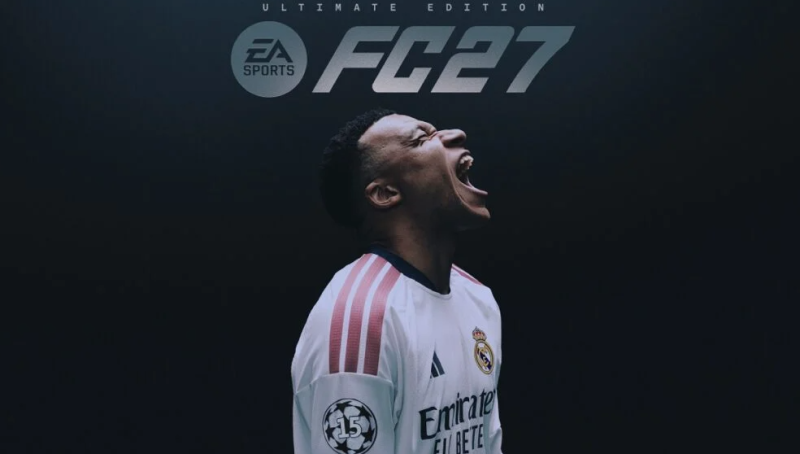
EA Sports FC 27 reportedly carrying a PEGI 16 rating, up from the PEGI 3 that every FIFA and FC game before it enjoyed, would be the biggest age-rating jump in the franchise's history. And it drags into the open a contradiction the series has managed to paper over for years: a game aggressively marketed to children and families is funded by a monetisation model that a European ratings authority now formally classifies as gambling-adjacent. To be clear upfront, PEGI hasn't officially rated FC 27 yet, and the rating currently doing the rounds stems from a leaked cover image circulating on social media, so treat it as strong indication rather than confirmed fact. But given the rules, it's close to inevitable.
The heart of the story is a fundamental mismatch that FC has always lived with. EA Sports FC, the rebranded FIFA, has for years occupied a specific cultural Space, that of the accessible, family-friendly football game that kids play with their friends and parents buy without a second thought. Its cover stars are global superstars, this year reportedly Kylian Mbappé, its marketing is bright and mainstream, and its PEGI 3 rating signalled "suitable for everyone." Underneath that wholesome exterior, though, sits Ultimate Team, the mode that generates an enormous share of the franchise's revenue and runs entirely on packs, randomised bundles of players bought with real or virtual currency. Open a pack, hope for a star, mostly get filler, buy more. Critics and researchers have argued for years that this is a loot box in everything but name, blurring the line between gaming and gambling, and now PEGI has effectively agreed.
What Actually Changed
The shift came in March 2026, when PEGI overhauled its framework to judge games not just on what they show, but on how they make money and how they keep players coming back. Under the new rules, any game containing paid random items, loot boxes, gets a default PEGI 16 rating, rising to PEGI 18 in some cases. Ultimate Team packs are about as textbook an example as exists. The framework also introduced other monetisation-based tiers: daily-quest style "play by appointment" mechanics draw a PEGI 7, escalating to PEGI 12 if the game punishes players for not returning, and games with no way to report or block other players online land a PEGI 18. NFTs and blockchain integration also trigger PEGI 18. It's a genuine reframing, since for the first time a major ratings body is treating a game's economic design as a child-safety concern on par with violence or language.
Crucially, the rules only apply to newly submitted games from June 2026 onward, which is precisely why FC 27 is caught while FC 26 keeps its PEGI 3. As a fresh submission built around the same pack mechanics, FC 27 has effectively no escape route, short of EA stripping paid randomness out of Ultimate Team entirely, which, given how much money the mode generates, essentially nobody expects to happen. EA faces a straightforward choice and has clearly picked the label over gutting its cash cow.
Why This Is Bigger Than a Number on a Box
The rating exposes the contradiction, but it also carries real practical weight, and that's what makes it more than symbolic. EA FC is one of the best-selling games across Europe, particularly in markets like the UK, Ireland, and Spain, and a huge share of its audience is young. A PEGI 16 rating means retailers are now formally obliged to ID-check younger buyers purchasing a physical copy, so the kid who used to walk up to the counter and buy the new FIFA on release day now needs an older person to do it for them. It could also interact with parental controls and account-level age locks, potentially hampering purchasing, access, and in-game communication for younger players whose accounts are restricted. None of this is catastrophic, and digital storefronts have their own age mechanisms, but it's a meaningful friction point bolted onto a franchise that was built on frictionless mass appeal.
More:Team Vitality Exits RENNSPORT as the Sim Racing Title Collapses
 Read
Read
 Source Editing
 Visual Editing


 Related news