It's done. As of August 4, Electronic Arts is a private company for the first time since 1990, the paperwork signed, the Nasdaq listing surrendered, and one of the largest game publishers on the planet now sitting under the control of a consortium fronted by Saudi Arabia's Public Investment Fund, Silver Lake, and Jared Kushner's Affinity Partners. The $55 billion price tag makes it the largest leveraged buyout in history, full stop, bigger than any deal in tech, media, or any other sector before it. And after nearly a year of regulatory reviews, shareholder votes, and hand-wringing, the moment everyone saw coming finally arrived with the quiet thud of a press release. EA CEO Andrew Wilson, who keeps his job through all of this, called it entering "this next chapter from a position of strength with partners who share our vision and ambition." The strength part is doing a lot of work in that sentence, and we'll come back to it.
Because here's the reality the celebratory language is designed to paper over: the hard part doesn't end with the deal closing, it begins there. A leveraged buyout works by borrowing enormous sums to fund the purchase, then dumping that borrowed money as debt onto the company being bought. In EA's case, the consortium put up roughly $36 billion in equity and financed the rest with $20 billion in debt committed by JPMorgan, around $18 billion of which was drawn at close. That debt now lives on EA's books. So a company that walked into Tuesday essentially debt-free walked out owing $20 billion, and every quarter from here on, servicing that debt becomes a fixed, non-negotiable cost that has to be paid before anything else. That's not a footnote. That's the single most important fact about the new EA, and it recontextualises everything the company does next.
"Position of Strength"
Wilson's insistence that EA enters this from strength is technically accurate and precisely why the debt is so notable. EA didn't get sold because it was failing. It just posted record results, with Battlefield 6 becoming 2025's best-selling US game, FC and Madden printing money through Ultimate Team, and the whole portfolio, The Sims, APEX, Skate, transferring intact. This was a thriving, profitable, cash-generating business. And that profitability is exactly what made it an attractive LBO target, because you can only saddle a company with $20 billion in debt if it generates enough reliable cash to service it. The health was the prerequisite for the leverage. So when Wilson frames the debt-loaded buyout as a position of strength, he's not wrong, he's just declining to mention that the strength is what's being borrowed against, and that the company now has to keep generating that cash under considerably more pressure than before, because now it's not just funding operations and shareholder returns, it's funding a debt mountain too.
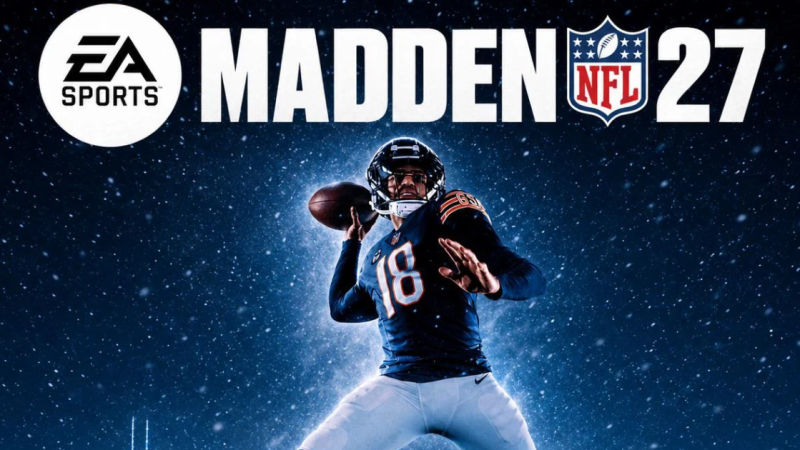
This is where the pattern we've documented all year snaps into focus, because it stops being speculation and becomes EA's operating reality. Everything that looked like a warning sign over the past few months, the reported expansion of single-player microtransactions in Madden 27 after the College Football reversal, paid expansions coming to UFC, the "we won't give in to every social media movement" hardening, sources describing revenue as "a heavy discussion internally", all of it lines up perfectly with the incentives a $20 billion debt load creates. A leveraged company needs cash, and the two levers for generating it are raising revenue and cutting costs. We've already seen EA reaching for both, with three rounds of layoffs across 2026 and a monetisation push spanning the portfolio, all before the deal even closed. Now that it has closed, those pressures don't ease, they intensify, because the debt is real and the interest clock is running.
Who Actually Owns EA Now
The ownership structure is worth stating plainly because the "consortium of three" framing undersells how concentrated this is. When the dust settles, PIF holds roughly 93.4% of EA, with Silver Lake at 5.5% and Affinity Partners at 1.1%. This is not a balanced three-way partnership. This is Saudi Arabia's sovereign wealth fund owning almost the entire company, with two minority partners along for the ride. PIF's deputy governor Turqi Alnowaiser framed entertainment and sports as "key areas of strategic focus" for the fund, which is true and part of a much larger Saudi effort to buy its way into global sport and culture, from LIV Golf to football clubs to the Esports World Cup we've covered extensively. EA now joins that portfolio, meaning FC, Madden, Battlefield, and The Sims are effectively state-influenced assets, controlled by a fund answerable to the Saudi government. EA has repeatedly promised it will retain "creative control" and "creative freedom" under the new ownership, and maybe it will, but that's a promise made by a management team that now serves an owner with its own priorities and a debt structure that constrains everyone's choices. The presence of Affinity Partners adds its own layer of intrigue, given the firm is led by Kushner and heavily backed by, yes, PIF money, folding a politically connected US investment vehicle into the mix alongside the sovereign fund.
The Objections That Couldn't Stop It
It's worth remembering this deal drew sustained, specific criticism that ultimately changed nothing, because that tells you something about how these things work. More than 40 US lawmakers asked the FTC to scrutinise it, warning explicitly that the $20 billion debt load "creates strong incentives for the acquiring firms to pursue further cost-cutting measures, including lay-offs, offshoring, restructuring, or studio closures." The Communications Workers of America pushed regulators to protect workers and examine the foreign-ownership implications. Those objections were substantively correct about the likely consequences, and legally powerless to prevent the deal, because merger review asks whether competition is harmed, and a consortium buying EA doesn't combine any rival game-makers. So the EU cleared it on narrow competition grounds, US regulators didn't block it, and the concerns about workers, debt, and state control, the actual controversies, simply had no legal mechanism to bite. The people who raised the alarms were right and lost anyway, which is its own quiet lesson about the limits of antitrust in the age of the mega-buyout.
So where does that leave things? EA is private, Wilson is still in charge, the headquarters stays in Redwood City, and on the surface almost nothing visible has changed for players yet. But the machinery underneath has been completely rebuilt. A profitable public company answerable to diffuse shareholders has become a debt-laden private company answerable overwhelmingly to a single sovereign fund, with a fixed obligation to generate the cash to service $20 billion in borrowing. Every decision Electronic Arts makes from here, about pricing, about monetisation, about staffing, about which games get made and how they're built to earn, now runs through that filter. The deal closing wasn't the end of the story. It was the starting gun. What EA does to its games, its players, and the people who still work there, under the weight of that debt and the direction of its new owners, is the story that actually matters, and as of Tuesday, we're finally going to find out.
More:Escape from Tarkov Codes: What Actually Works, and a Big Caveat
 Read
Read
 Source Editing
 Visual Editing


 Related news