FIFA's Digital Football Strategy Unbundles a Market EA Built

From TwogPedia
News/FIFA's Digital Football Strategy Unbundles a Market EA Built


FIFA's Digital Football Strategy Unbundles a Market EA Built

Business

29 May 2026 09:33

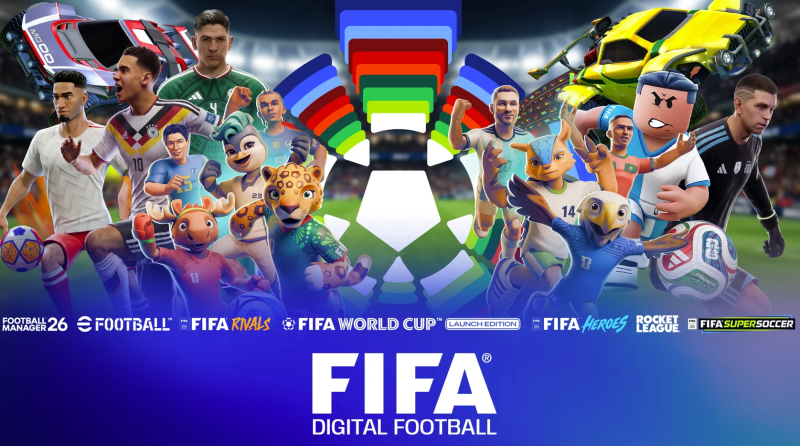
FIFA is changing the game and it might be for the best. FIFA has now signed deals across at least seven games and studios, organising them into a four-category framework that explicitly maps to different kinds of players. The categories are football action simulation, football action non-simulation, non-action simulation, and non-action non-simulation, and each is being filled by a different partner. FIFA World Cup Launch Edition, the new flagship simulation built by Delphi Interactive for Netflix Games, sits in the first quadrant. Football Manager occupies the third. The whole structure is built to argue that football gaming was never really one market in the first place, it just looked that way because EA owned all of it.

Of course this is a direct threat to EA. EA Sports FC kept the simulation crown after the split and continues to lead that segment by a wide margin, so FIFA's response has been to define seven other segments and partner with someone in each one. The portfolio now includes Delphi Interactive's Netflix-exclusive sim, EMBER's free-to-play arcade title FIFA Heroes, Mythical Games' FIFA Rivals on mobile, GameFam's FIFA Super Soccer on Roblox, Sports Interactive's Football Manager carrying official tournament events, Konami's eFootball running FIFAe esports, and Epic's Rocket League hosting FIFAe events. Multiple partners, multiple deals.

The Netflix Choice Is the Most Telling Piece

For starters, FIFA World Cup Launch Edition is launching exclusively on Netflix Games for mobile and select smart TVs, with phones used as controllers, and it skips PlayStation, Xbox, and PC entirely. Which is unheard of, and kind of bad, since thirty years the football flagship has lived on consoles, because that's where the simulation audience and the money sat. Putting the new World Cup-tied simulation behind a streaming subscription instead is a deliberate bet that the next billion football gamers come through phones and living-room TVs. In plain terms, FIFA is betting big. Time will tell.

Whether the Quadrant Framework Survives Contact

The real question is whether the four-category model holds up or whether it's mostly branding to make a patchwork of opportunistic deals look like a master plan. FIFA Heroes and FIFA Rivals were each signed years apart with different studios, and Football Manager and eFootball came in through their own existing arrangements. Calling the whole assemblage a "Digital Football Ecosystem" with perfect quadrants does a lot of "presentational" work. The substance underneath isn't necessarily wrong, though. The audience really is segmented this way, and EA's old monopoly really did treat radically different players (a Football Manager spreadsheet enthusiast, a Roblox kid, an esports pro, a casual phone player) as variations of the same customer. FIFA's bet is that those people deserved different games all along. Whether the strategy works as a unified ecosystem or stays a coordinated collection of separate deals will become clearer once the Delphi title actually launches this summer, alongside the World Cup it's built around.

More:Fortnite's iOS Return Drives Eight-Year Download High

Tags: FIFA
Share:


FIFA's Digital Football Strategy Unbundles a Market EA Built

Business

29 May 2026 09:33

Tags: FIFA

FIFA is changing the game and it might be for the best. FIFA has now signed deals across at least seven games and studios, organising them into a four-category framework that explicitly maps to different kinds of players. The categories are football action simulation, football action non-simulation, non-action simulation, and non-action non-simulation, and each is being filled by a different partner. FIFA World Cup Launch Edition, the new flagship simulation built by Delphi Interactive for Netflix Games, sits in the first quadrant. Football Manager occupies the third. The whole structure is built to argue that football gaming was never really one market in the first place, it just looked that way because EA owned all of it.

Of course this is a direct threat to EA. EA Sports FC kept the simulation crown after the split and continues to lead that segment by a wide margin, so FIFA's response has been to define seven other segments and partner with someone in each one. The portfolio now includes Delphi Interactive's Netflix-exclusive sim, EMBER's free-to-play arcade title FIFA Heroes, Mythical Games' FIFA Rivals on mobile, GameFam's FIFA Super Soccer on Roblox, Sports Interactive's Football Manager carrying official tournament events, Konami's eFootball running FIFAe esports, and Epic's Rocket League hosting FIFAe events. Multiple partners, multiple deals.

The Netflix Choice Is the Most Telling Piece

For starters, FIFA World Cup Launch Edition is launching exclusively on Netflix Games for mobile and select smart TVs, with phones used as controllers, and it skips PlayStation, Xbox, and PC entirely. Which is unheard of, and kind of bad, since thirty years the football flagship has lived on consoles, because that's where the simulation audience and the money sat. Putting the new World Cup-tied simulation behind a streaming subscription instead is a deliberate bet that the next billion football gamers come through phones and living-room TVs. In plain terms, FIFA is betting big. Time will tell.

Whether the Quadrant Framework Survives Contact

The real question is whether the four-category model holds up or whether it's mostly branding to make a patchwork of opportunistic deals look like a master plan. FIFA Heroes and FIFA Rivals were each signed years apart with different studios, and Football Manager and eFootball came in through their own existing arrangements. Calling the whole assemblage a "Digital Football Ecosystem" with perfect quadrants does a lot of "presentational" work. The substance underneath isn't necessarily wrong, though. The audience really is segmented this way, and EA's old monopoly really did treat radically different players (a Football Manager spreadsheet enthusiast, a Roblox kid, an esports pro, a casual phone player) as variations of the same customer. FIFA's bet is that those people deserved different games all along. Whether the strategy works as a unified ecosystem or stays a coordinated collection of separate deals will become clearer once the Delphi title actually launches this summer, alongside the World Cup it's built around.

More:Fortnite's iOS Return Drives Eight-Year Download High

Share:
Sources: