PlayerUnknown's Restructure Is What a Self-Funded Runway Ending Looks Like
Business
04 June 2026 05:36
Making games is hard, there is no doubt about it. There are passion projects, some of them works, some not so much.
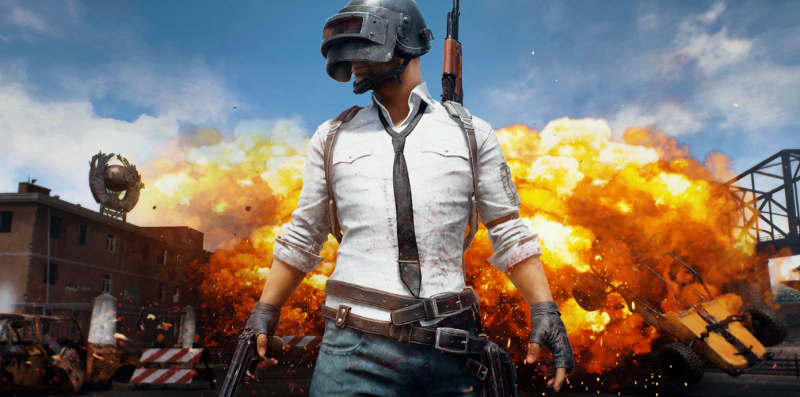
Brendan Greene aka PlayerUnknown halting development on Prologue: Go Wayback and restructuring PlayerUnknown Productions is the clearest example you'll see this year of the limits built into self-funding an ambitious project. Greene was direct about it, writing that he had "reached the limits of how far I can continue to fund this journey in its current form,". The studio he built in Amsterdam after leaving Krafton in 2021 was bankrolled largely on his own resources, the windfall from PUBG selling north of 70 million copies. Which was one of the biggest gaming success stories of all time.
PlayerUnknown Productions was running two parallel efforts: a research team building Melba, the terrain-generation technology meant to break the scale limits on virtual worlds and eventually generate something close to an Earth-sized map, and a game team building Go Wayback as the first playable proof of that tech. Greene is keeping the research and killing the game. He'll continue Melba with a smaller team while halting Go Wayback barely six months after it hit Early Access on Steam and the Epic Games Store last November.
Contents
Why the Self-Funded Model Has a Hard Ceiling
There is flexibility with self funded model for sure, but also some risks are associated with it. A studio with a publisher or a VC behind it can usually raise another round, renegotiate terms, or trade equity for more time when a project overruns. When the founder's money runs low, there's no board to appeal to and no next tranche to unlock, the runway simply ends. Greene's whole venture was always framed as the first of three steps toward a larger goal he calls Project Artemis, an enormously long-horizon vision, and long horizons are exactly what burn through fixed capital the fastest.
The Wind-Down Itself Was Handled Cleanly
Go Wayback will become free for all future players in an upcoming update, and the studio is investigating ways to refund people who already paid the $20 on Steam and Epic. Offering refunds on a launched product is a rare move, since most studios in this position delist the game or leave it in limbo, and choosing instead to make it free and look into giving money back is a relatively honest way to close out a commercial product that won't be finished as promised. The door is left technically open for Go Wayback to return someday, though for now that reads more as hope than plan. The priority Greene named was supporting the affected employees through the transition, which is the part of any restructure that matters most to the people actually living it. The research continues, the vision survives in reduced form, and the lesson underneath is simple enough: even a fortune has a finish line.
More:Marathon's Free Kits Are Bungie's Latest Damage-Control Reflex
Related news
View AllTL;DR * PUBG: Battlegrounds has been confirmed as a title for the inaugural Esports Nations Cup in Riyadh from November...
More
Feb 16, 2026
Turkish team Galatasaray are taking another step into the esports world with a fresh sponsorship agreement signed with PUBG Mobile,...
Sponsorships
Jan 13, 2026
Brazilian esports team Alpha7 Esports has won the 2025 PUBG Mobile Global Championship, also known as PMGC. The tournament was...
More
Dec 15, 2025
Krafton and PUBG Studios have revealed a brand-new game called PUBG: Black Budget, a spin-off of the popular PUBG: Battlegrounds....
More
Nov 21, 2025
Krafton has officially announced the much-anticipated details for the PUBG Global Championship (PGC) 2025, slated to take place in Bangkok...
More
Sep 25, 2025
Business
04 June 2026 05:36
Making games is hard, there is no doubt about it. There are passion projects, some of them works, some not so much.
Brendan Greene aka PlayerUnknown halting development on Prologue: Go Wayback and restructuring PlayerUnknown Productions is the clearest example you'll see this year of the limits built into self-funding an ambitious project. Greene was direct about it, writing that he had "reached the limits of how far I can continue to fund this journey in its current form,". The studio he built in Amsterdam after leaving Krafton in 2021 was bankrolled largely on his own resources, the windfall from PUBG selling north of 70 million copies. Which was one of the biggest gaming success stories of all time.
PlayerUnknown Productions was running two parallel efforts: a research team building Melba, the terrain-generation technology meant to break the scale limits on virtual worlds and eventually generate something close to an Earth-sized map, and a game team building Go Wayback as the first playable proof of that tech. Greene is keeping the research and killing the game. He'll continue Melba with a smaller team while halting Go Wayback barely six months after it hit Early Access on Steam and the Epic Games Store last November.
Why the Self-Funded Model Has a Hard Ceiling
There is flexibility with self funded model for sure, but also some risks are associated with it. A studio with a publisher or a VC behind it can usually raise another round, renegotiate terms, or trade equity for more time when a project overruns. When the founder's money runs low, there's no board to appeal to and no next tranche to unlock, the runway simply ends. Greene's whole venture was always framed as the first of three steps toward a larger goal he calls Project Artemis, an enormously long-horizon vision, and long horizons are exactly what burn through fixed capital the fastest.
The Wind-Down Itself Was Handled Cleanly
Go Wayback will become free for all future players in an upcoming update, and the studio is investigating ways to refund people who already paid the $20 on Steam and Epic. Offering refunds on a launched product is a rare move, since most studios in this position delist the game or leave it in limbo, and choosing instead to make it free and look into giving money back is a relatively honest way to close out a commercial product that won't be finished as promised. The door is left technically open for Go Wayback to return someday, though for now that reads more as hope than plan. The priority Greene named was supporting the affected employees through the transition, which is the part of any restructure that matters most to the people actually living it. The research continues, the vision survives in reduced form, and the lesson underneath is simple enough: even a fortune has a finish line.
More:Marathon's Free Kits Are Bungie's Latest Damage-Control Reflex
Related news
View AllTL;DR * PUBG: Battlegrounds has been confirmed as a title for the inaugural Esports Nations Cup in Riyadh from November...
More
Feb 16, 2026
Turkish team Galatasaray are taking another step into the esports world with a fresh sponsorship agreement signed with PUBG Mobile,...
Sponsorships
Jan 13, 2026
Brazilian esports team Alpha7 Esports has won the 2025 PUBG Mobile Global Championship, also known as PMGC. The tournament was...
More
Dec 15, 2025
Krafton and PUBG Studios have revealed a brand-new game called PUBG: Black Budget, a spin-off of the popular PUBG: Battlegrounds....
More
Nov 21, 2025
Krafton has officially announced the much-anticipated details for the PUBG Global Championship (PGC) 2025, slated to take place in Bangkok...
More
Sep 25, 2025